
LOFT CONVERSIONS
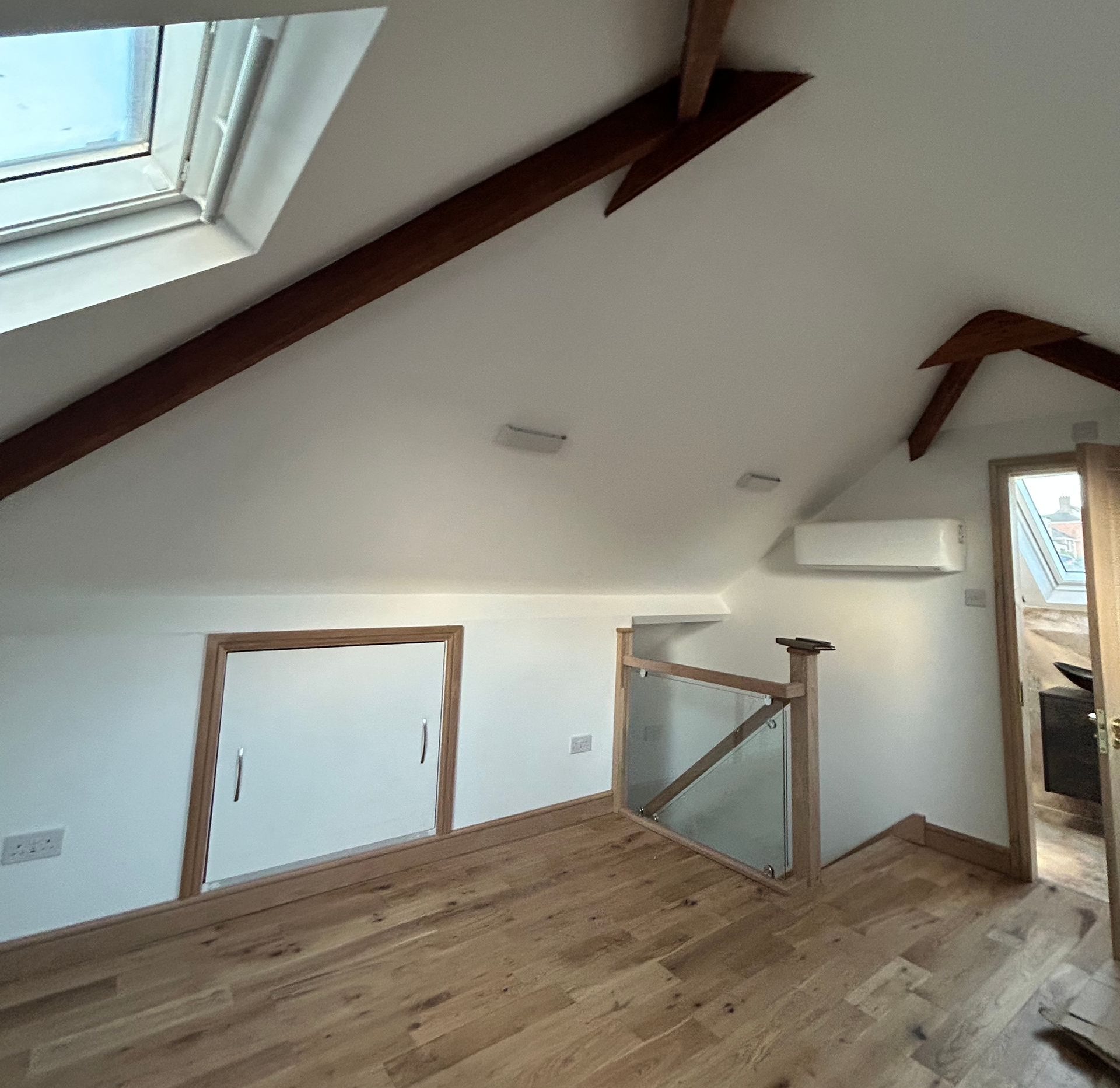
Building Regulations for Loft Conversions
A loft conversion is one of the most effective ways to add space and value to your home. However, unlike some small internal alterations, loft conversions must comply fully with UK Building Regulations to ensure the new space is safe, structurally sound, and energy efficient.
Here at ONEGRP LTD, we manage the entire Building Control process on your behalf, ensuring your project meets all statutory requirements from start to finish.
Do Loft Conversions Need Building Regulations Approval?
Yes.
All loft conversions require Building Regulations approval, regardless of whether planning permission is needed. Building Regulations are separate from planning permission and focus on safety and construction standards rather than appearance.
We handle all applications, drawings, structural calculations and inspections as part of our service
Key Building Regulation Requirements for Loft Conversions
Below are the main areas your loft conversion must comply with:
1. Structural Strength
Your existing ceiling joists are not designed to carry the load of a new habitable room.
To comply with regulations:
- New structural floor joists are installed
- Steel beams (RSJs) are typically added for support
- Load is transferred safely to existing walls
- Structural calculations are provided by a qualified engineer
This ensures the new floor is safe and prevents movement or cracking below.
2. Fire Safety
Fire safety is one of the most important aspects of loft conversion regulations.
Depending on the layout and number of storeys in your property, requirements may include:
- Fire-rated doors to all rooms off the stairwell
- Mains-powered, interlinked smoke alarms on each level
- Protected escape route from loft to final exit
- Fire-resistant plasterboard and upgraded ceilings
- In some cases, upgraded fire doors on lower floors
We assess your property layout and design the safest compliant solution.
3. Staircase Regulations
Loft stairs must meet strict guidelines regarding:
- Head height clearance (minimum 2m where possible)
- Maximum pitch (usually 42 degrees)
- Correct tread depth and riser height
- Safe handrails and balustrades
The staircase must provide safe and practical access — space-saving stairs are rarely acceptable for main habitable rooms.
4. Insulation & Energy Efficiency
Your loft conversion must meet modern thermal efficiency standards.
This includes:
- High-performance roof insulation
- Insulated dormer walls
- Insulated party walls where required
- Energy-efficient roof windows
- Adequate ventilation to prevent condensation
Proper insulation improves comfort and reduces heating costs.
5. Sound Insulation
If your property is semi-detached or terraced, Building Regulations may require enhanced sound insulation between adjoining properties to minimise noise transfer.
6. Ventilation
To prevent condensation and damp issues, regulations require:
- Background ventilation (trickle vents)
- Rapid ventilation (opening windows)
- Mechanical extraction in bathrooms or en-suites
Correct ventilation is critical in roof spaces.
7. Drainage (If Adding a Bathroom)
If your loft conversion includes a bathroom or en-suite:
- Waste pipes must be correctly sized and routed
- Soil pipes must comply with regulations
- Venting and fall angles must be correct
- In some cases, pumped systems may be required
All plumbing work is installed and tested to regulatory standards.
The Building Control Process
There are two routes to approval:
Full Plans Application
- Detailed drawings and structural calculations are submitted and approved before work begins.
Building Notice
A faster route where approval is issued during staged inspections.
Building Control officers will inspect key stages including:
- Structural steel installation
- Floor construction
- Insulation installation
- Staircase installation
- Final completion
Once approved, you will receive a Completion Certificate — essential if you ever sell your property.
Many loft conversions fall under Permitted Development and do not require planning permission. However, Building Regulations approval is always required.
Our Approach
We provide a fully managed service including:
- Design coordination
- Structural engineering
- Building Control applications
- All required inspections
- Certification on completion
Our goal is to deliver a loft conversion that is not only beautiful and functional — but fully compliant, safe, and future-proof.